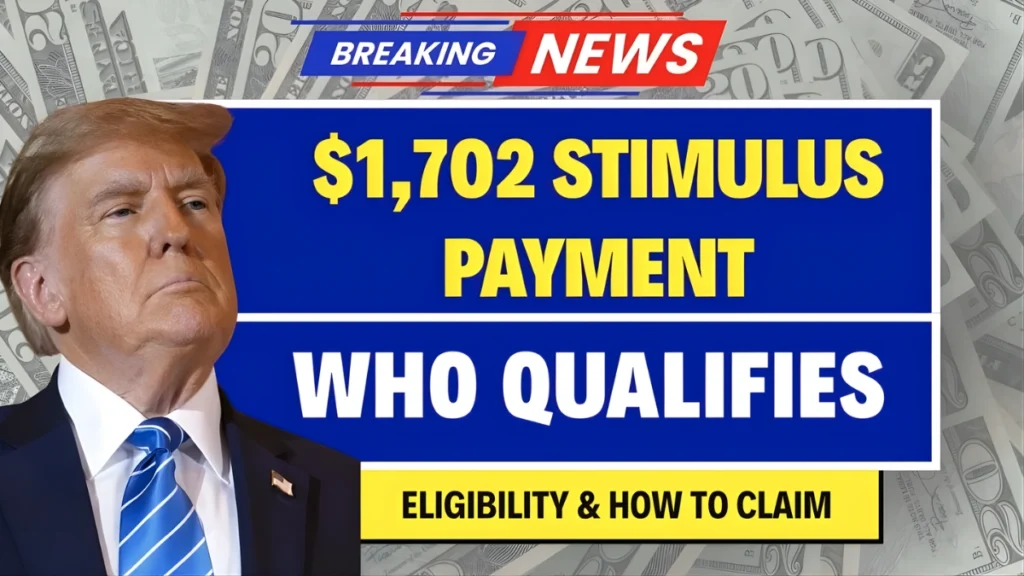
A new proposal for a $1,702 stimulus payment is gaining attention nationwide as federal officials prepare updated relief measures for November 2025. With inflation, rising household costs, and growing economic pressure on families, the payment is expected to provide meaningful financial support to millions of eligible Americans. While not yet fully approved, the IRS has already drafted early guidelines so the payment can be issued quickly if authorized.
The $1,702 payment is designed to assist low- and middle-income citizens with essential expenses such as food, rent, medical bills, utilities, and transportation. Similar to previous relief programs, the IRS will rely on tax data to verify eligibility and process payments automatically.
Who Will Qualify for the $1,702 Stimulus Payment?
Eligibility will be determined by citizenship status, income limits, and 2024 tax filing records. U.S. citizens, lawful permanent residents, and qualifying resident aliens with valid Social Security numbers are expected to qualify if they meet federal income guidelines. Adults who are listed as dependents on another taxpayer’s return will not receive the payment individually.
Direct deposit is expected to be the fastest method to receive the $1,702 stimulus. Incomplete or outdated banking details may result in delayed payment through paper checks or prepaid debit cards.

Expected Income Eligibility for the $1,702 Payment
| Filing Status | Full Eligibility (Estimated) | Partial Eligibility Range |
|---|---|---|
| Single | Up to $75,000 | $75,001 – $99,000 |
| Married Filing Jointly | Up to $150,000 | $150,001 – $198,000 |
| Head of Household | Up to $112,500 | $112,501 – $136,500 |
Final income thresholds may be adjusted once Congress finalizes the relief legislation.
November 2025 Full Payment Schedule
As with previous national stimulus programs, the IRS will distribute the $1,702 payment in phases rather than a single nationwide release. This phased schedule helps manage processing volume and ensures timely deposits.
Expected Payment Timeline
• Phase 1 (Nov 9–12, 2025): Direct deposits for those with verified bank information
• Phase 2 (Nov 15–22, 2025): Direct deposits for taxpayers who recently updated their details
• Phase 3 (Late Nov–Mid Dec 2025): Paper checks and prepaid debit cards for non-direct-deposit recipients
Most eligible Americans using direct deposit should receive their payment between November 9 and November 22, 2025.

IRS Guidelines to Ensure Fast Payment
The IRS recommends the following steps for anyone expecting the $1,702 payment:
• File your 2024 tax return immediately if you haven’t yet
• Confirm your bank account and routing number in your IRS online account
• Update your mailing address to avoid returned checks
• Respond quickly to any IRS identity verification letters
• Monitor your payment using the official IRS tracking tool once launched
Individuals who fail to receive their payment by mid-December may need to request a payment trace or file for a Recovery Rebate Credit.
Key Notes for All Beneficiaries
• The $1,702 payment is not taxable and does not reduce tax refunds
• SSI, SSDI, VA, and Social Security retirement recipients are expected to qualify if income rules are met
• Non-filers may need to submit a simplified IRS return
• Mixed-status families may receive reduced or partial payments
• Payment is automatic—no separate application required
Best Ways to Use the $1,702 Stimulus Wisely
Financial experts recommend using the $1,702 payment to cover essential expenses such as rent or mortgage payments, groceries, utilities, healthcare, and transportation. Others may choose to reduce high-interest debt or build an emergency savings fund. Using the relief to stabilize financial health before the holiday season can help households avoid additional economic strain.

Frequently Asked Questions
Q1: Is the $1,702 stimulus payment officially approved?
Not yet. Federal approval is pending.
Q2: Will every American receive the same amount?
No. Higher-income individuals may receive a reduced amount or no payment.
Q3: Do I need to apply for the payment?
No. Payments will be automatic for eligible taxpayers.
Q4: Will the payment impact Social Security or tax refunds?
No. It will not reduce other benefits and is not considered taxable income.

Disclaimer: This article is based on proposed federal relief plans and early IRS guidance. Payment schedules, income limits, and final eligibility rules may change once the legislation is approved. For accurate updates, always refer to official IRS announcements and government sources.