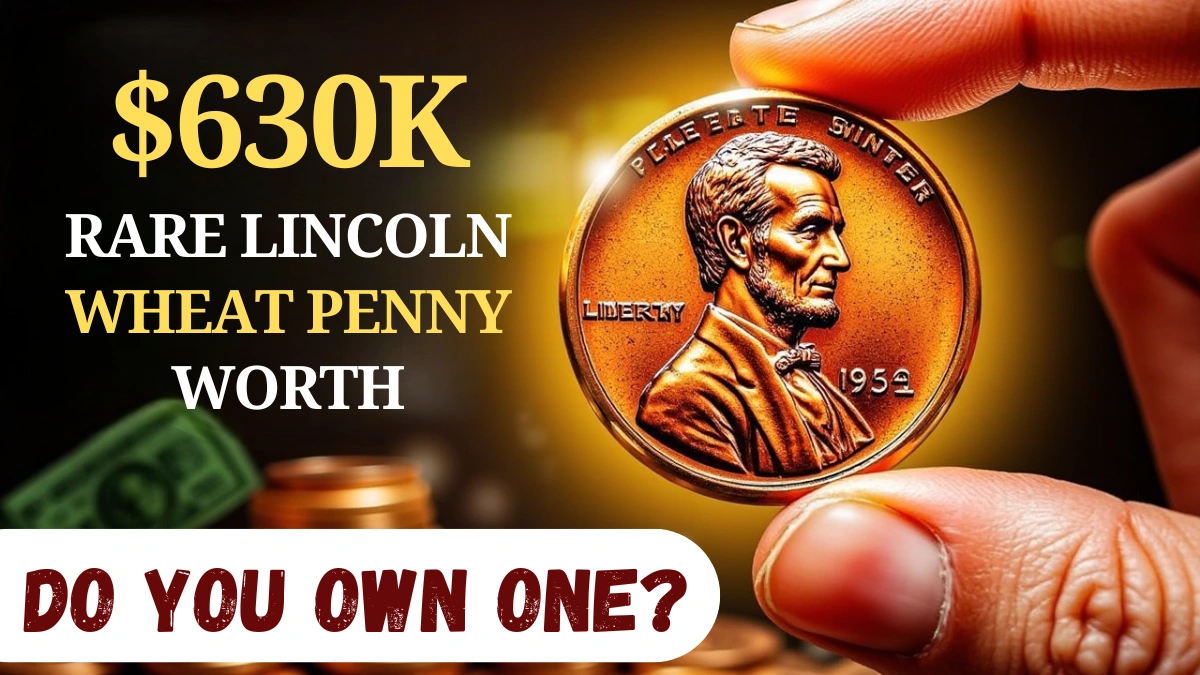
Lincoln Wheat Penny Value: Lincoln Wheat Pennies are some of the most collected coins in American history, and many people still have them tucked away in old jars, drawers, albums, or even loose in their pocket change. While most Wheat Pennies are worth only a few cents, certain rare dates, mint errors, and high-grade examples have recently sold for hundreds, thousands, and in a few cases over $100,000 at auctions. That means an ordinary-looking penny from decades ago could actually be a valuable treasure.
Why Wheat Pennies Can Be Worth So Much
Lincoln Wheat Penny Value- Wheat Pennies were minted between 1909 and 1958, featuring Abraham Lincoln on the front and the classic “wheat ears” reverse. Their value increased over the years because many early dates had low mintages, and several coins were struck with major minting errors. Collectors also pay a premium for coins that survived in sharp, original condition without scratches or damage. As a result, what seems like a common old penny may actually be extremely rare today.

The Rare Wheat Pennies Everyone Is Searching For
Some Lincoln Wheat Pennies are extremely valuable because of their date, condition, or a striking mistake. The famous 1909-S VDB, the 1914-D, and the 1922 No-D have become legendary among collectors. Even ordinary dates can be worth serious money if they show doubled lettering, repunched mint marks, strong die cracks, or other mint errors. Many of these coins still circulate in collections and inherited coin jars, which is why people are discovering valuable Wheat Pennies even today.
How to Check If Your Wheat Penny Is Worth Money
Start by carefully looking at the date and mint mark, which appears below the year. Coins with an S (San Francisco) or D (Denver) mint mark often have higher value, especially from the early 1900s. Next, examine the coin’s details. Sharp lines in Lincoln’s beard, clear letters, smooth edges, and an even shine indicate higher value. Any unusual doubling on numbers or letters, missing details, or misaligned designs may signal a rare mint error. Even a small difference can turn a penny worth cents into one worth hundreds.

Condition Matters More Than Anything
Professional grading companies like PCGS and NGC use a 70-point scale to rate a coin’s condition, and high-grade Wheat Pennies can command enormous prices. A common-date coin worth a few dollars in average condition can jump to hundreds in Mint State grade. That’s why collectors sometimes pay big premiums for pennies that look almost untouched, even if the date is common.
Could Your Old Coins Be a Hidden Treasure?
Many people inherit jars of old Wheat Pennies from parents or grandparents without realizing their potential value. Others stumble across valuable coins by accident in pocket change or at flea markets. If you find early dates, sharp details, or anything unusual, your penny may be far more valuable than you think. With growing interest in U.S. coin collecting, rare Wheat Pennies continue to rise in demand and price.

Conclusion: Lincoln Wheat Pennies may appear small and ordinary, but some of them can be worth a surprising amount of money. Whether it’s an early mintage rarity, a dramatic mint error, or a perfectly preserved example, your old pennies could be worth far more than face value. Checking your change carefully is the first step — one rare Wheat Penny can turn a simple penny hunt into an amazing discovery.
Disclaimer: This article is for informational and news-reporting purposes only. It is not financial or appraisal advice. Actual value depends on professional grading, condition, rarity, and the current market.