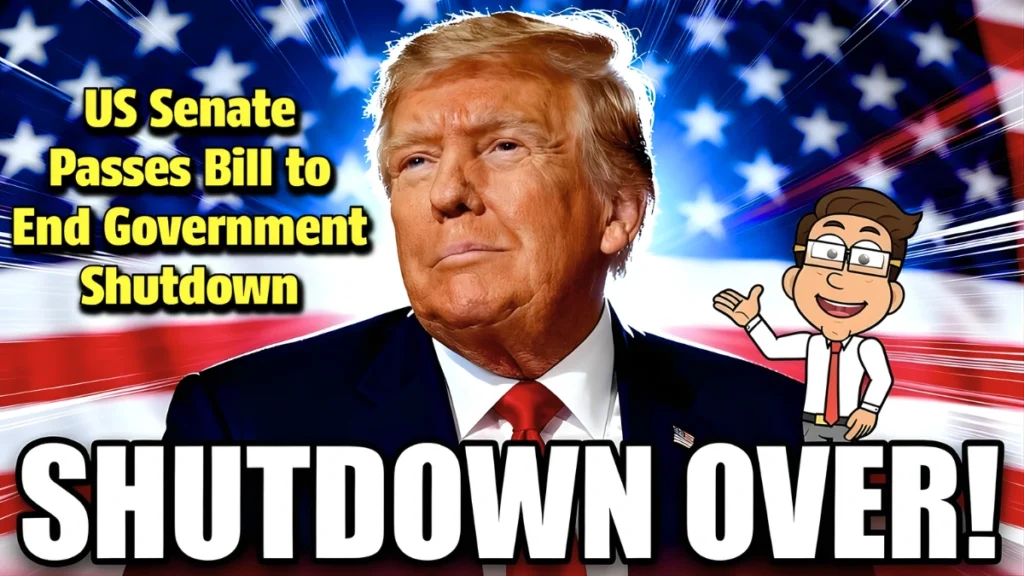
After days of stalled negotiations and growing national concern, the U.S. Senate Passes has officially passed a critical emergency bill to end the federal government shutdown. The bipartisan vote brings immediate relief to millions of Americans affected by paused federal services, delayed paychecks, and halted government operations. The bill now moves swiftly toward implementation, ensuring federal agencies can reopen and resume normal operations.
The shutdown had impacted everything from federal employee pay to food assistance programs, immigration services, Social Security field operations, and national parks. With the Senate’s approval, government functions are expected to restart within hours of the President signing the legislation.
What the Senate Bill Includes
The newly passed bill provides temporary funding to keep the federal government open for the next several weeks or months, depending on the final agreement. It includes emergency allocations for agencies affected by the shutdown, protections for essential workers, and provisions to ensure federal employees receive back pay for lost wages. The bill is considered a short-term fix, but it prevents further economic damage and service disruptions.
The Senate emphasized the urgency of reopening federal departments, citing national security risks, delayed benefit processing, and significant financial impacts on working families and businesses.

Who Is Directly Affected by the Shutdown Ending?
The end of the shutdown will benefit millions of Americans, especially federal workers, contractors, Social Security applicants, veterans, small business owners, and beneficiaries of federal programs. Government agencies that were previously operating with limited staff or full closure will now resume normal timelines. Air travel operations, passport processing, food safety inspections, and federal courts are among the top services quickly returning to normal.
Key Groups Impacted by the Shutdown and Reopening
| Group Affected | Shutdown Impact |
|---|---|
| Federal Workers & Contractors | Missed paychecks |
| Social Security & Medicare Applicants | Delayed processing |
| SNAP & Food Assistance Programs | Funding uncertainty |
| Travelers & TSA Workers | Longer airport wait times |
| Veterans | Slowed benefits and services |
| Small Businesses Using Federal Loans | Processing delays |
The bill ensures back pay and restoration of essential services for all affected categories.
How Soon Will the Government Fully Reopen?
Once the President signs the legislation, federal agencies will begin reopening within hours, though some operations may take up to 48–72 hours to fully return to normal. Federal employees are expected to receive instructions from their agencies regarding return-to-work schedules. Back pay for federal workers could begin processing as early as the next payroll cycle.
Citizens relying on passport services, immigration processing, SBA loans, and tax-related support should see significant improvements in wait times over the coming week.

Why the Government Shutdown Happened
The shutdown began due to a breakdown in budget negotiations triggered by disagreements over federal spending priorities. Both parties failed to reach agreement before the funding deadline, forcing a partial or full shutdown of government operations. Economic experts estimate that each week of a shutdown costs billions of dollars and undermines public trust, leading lawmakers to push urgently for a solution.
A Senate compromise ultimately broke the deadlock, ensuring temporary funding while longer-term budget discussions continue.
What Comes Next?
The passed bill is a short-term funding measure, meaning lawmakers must still negotiate a longer-term federal budget. Analysts expect continued political debate over defense funding, social programs, border security, and domestic spending. If no long-term agreement is reached, another potential shutdown deadline could arise.
For now, however, Americans can expect a rapid return to normal government operations.

Frequently Asked Questions
Q1: Will federal workers receive back pay?
Yes. The bill guarantees full back pay for all federal employees affected by the shutdown.
Q2: How soon will services return to normal?
Most services will restart within 24–72 hours after the bill is signed.
Q3: Can another shutdown happen?
Yes. This bill is temporary unless Congress passes a long-term funding agreement.
Q4: Does the bill change Social Security or Medicare benefits?
No. These programs are not reduced or altered by the bill.

Disclaimer: This article is based on publicly available government statements and early congressional updates. Final implementation details may vary depending on agency timelines and additional federal guidance. Always refer to official government announcements for the most accurate and updated information.